AI in hiring: how small teams can use it without losing the human touch
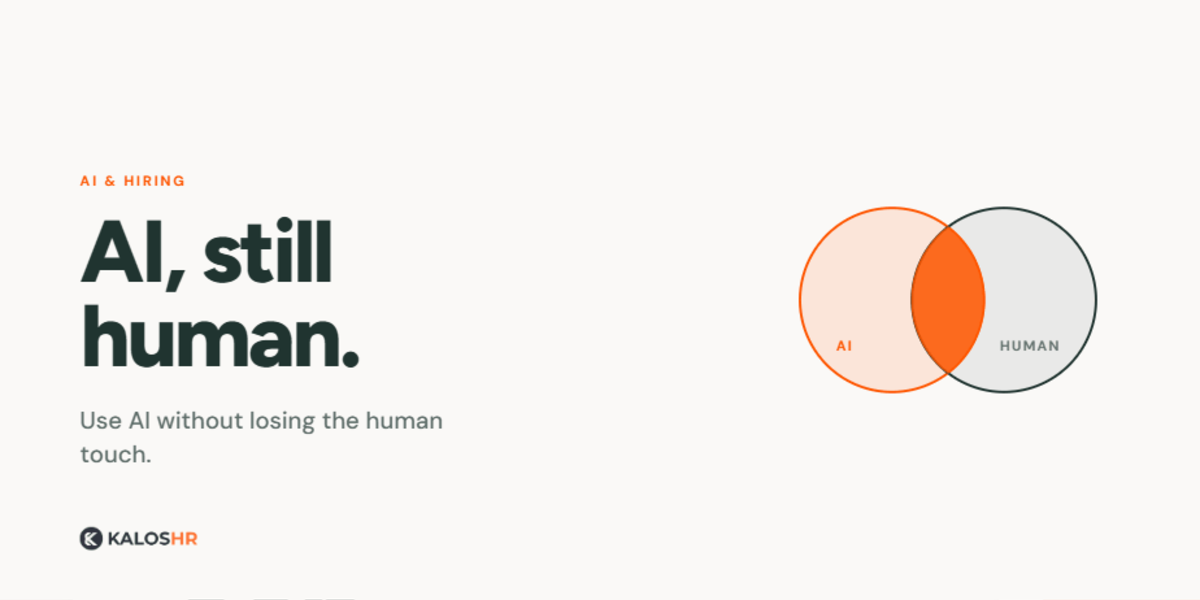
AI has arrived in hiring fast, and the noise around it is loud. Some promise it'll do your recruiting for you; others warn it'll bias your decisions and miss your best people. For a small team without a recruiter, the truth sits in the middle: AI can take real hours of busywork off your plate, and it can also quietly make worse decisions if you hand it the wrong job. The skill is knowing which is which.
Here's where AI genuinely helps a small team hire, where it doesn't, and how to keep the human judgment that good hiring needs.
Where AI helps
AI earns its place on the repetitive, time-heavy parts of hiring, the work that drains your week without needing your judgment.
Sorting and prioritising applications. When 60 people apply, AI-assisted scoring can rank them against your stated requirements so you start with the strongest instead of reading all 60 in order. It's a first pass, not a verdict, and it saves hours.
Drafting the routine writing. Job descriptions, screening questions, interview questions, rejection emails. AI gives you a solid first draft in seconds that you then make specific and human. The blank page is the slow part; AI removes it.
Summarising and organising. Pulling the key points from a long CV, or drafting notes from your own interview jottings, so nothing gets lost.
Answering candidate questions. Routine queries about the process or timeline can be handled instantly, keeping candidates warm without adding to your inbox.
The pattern: AI is good at the high-volume, low-judgment work that stops you from spending time on the decisions that matter.
Where AI should not decide
The line is simple. AI can help you prepare a decision. It shouldn't make one. Three places to keep it out:
The final hiring call. A score or a summary is an input, never the answer. The decision about who joins your team is yours, made on real conversations and judgment.
Rejecting people automatically with no human eye. Auto-rejecting on a model's say-so risks throwing out strong, unconventional candidates and damaging your reputation. A person should see anyone borderline.
Assessing character and fit. Whether you'd trust someone with your customers, how they think under pressure, whether they own their mistakes, these come through in conversation, not from a model reading a CV.
The risks to watch
AI in hiring carries real risks worth naming. Models trained on past data can carry past bias, so a tool left to rank or reject unchecked can quietly favor the wrong patterns. And AI can be confidently wrong, scoring a great candidate low because their experience doesn't match an expected shape. The defense is the same in both cases: keep a human in the loop, use AI to surface and prioritise rather than to decide, and sanity-check what it tells you against the real person.
Keep the human where it counts
Used well, AI gives a small team back the hours it was losing to admin, so you can spend them where hiring is won: talking to people. The goal isn't to automate hiring. It's to automate the busywork around hiring so the human parts get your full attention.
That's the approach KalosHR takes. Applicants arrive scored and sorted so you skip the manual triage, emails and scheduling handle themselves, and the decisions, who to interview, who to hire, stay firmly with you. The tool clears the clutter; you make the call.
AI won't replace judgment in hiring, and you shouldn't want it to. Let it do the sorting, drafting, and admin. Keep the deciding human, and you get the speed without losing the thing that makes a hire good.